


Mud fever in horses is one of the most common skin problems, appearing around the pasterns and lower parts of the legs.
Scabs on the pasterns, redness, moist skin lesions, hypersensitivity or cracked skin may appear harmless at first, but if left without proper care, the problem can gradually worsen.
Many owners notice the first symptoms especially:
- after prolonged contact with mud
- on wet ground
- after washing the legs
- after more intensive training
- during everyday life in a wet environment
Not every case of mud fever looks serious from the start.
Very often, the first symptoms develop gradually and initially resemble only mild skin irritation.
That is exactly why the first signs should never be ignored.
What does mud fever in a horse look like?
What contributes to its development?
And how can you effectively support the regeneration of affected skin?
What Is Mud Fever in a Horse?
Mud fever in horses, also commonly referred to as pastern dermatitis, is a skin condition that most often affects the pasterns and lower parts of the legs.
At first, the lesions may appear quite mild:
- slight redness
- small scabs
- mild skin hypersensitivity
- moist lesions
- small sores
Over time, however, the condition can gradually worsen, leading to greater discomfort and increasingly difficult skin recovery.
Mud fever very often develops in areas where the skin is exposed to prolonged moisture, mud and factors that weaken its natural protective barrier.
With skin problems, it is important not only to temporarily dry out the lesions but also to genuinely support skin regeneration and the rebuilding of the skin’s natural protective barrier.
The condition often affects deeper layers of the skin, which is why proper care should not focus solely on the surface of the lesions.
What Does Mud Fever in a Horse Look Like?
The most common symptoms of mud fever include:
- scabs on the pasterns
- reddened skin
- moist lesions
- cracked skin
- hypersensitivity to touch
- sores
- swelling
- increased tenderness of the legs
In more advanced cases, the horse may:
- react with discomfort during leg cleaning
- be reluctant to lift its legs
- rub its limbs
- show increased sensitivity during movement
The first symptoms often simply look like:
- scabs on the legs
- wet pasterns
- sores around the pastern area
- cracked skin
- slightly reddened areas of skin
With more pronounced changes, it is also worth monitoring for swelling or increased heat in the limb.
Mud Fever in Horses – Causes
The most common causes of mud fever include:
- prolonged moisture
- mud
- micro-damage to the skin
- weakening of the skin’s natural protective barrier
- skin irritation
- prolonged contact of the legs with wet ground
- insufficient skin recovery
The problem often develops gradually and initially appears harmless.
That is exactly why many owners only begin treatment once larger scabs, soreness or cracked skin appear.
Meanwhile, introducing proper care from the very first symptoms can make a significant difference to the skin’s ability to recover.
Prolonged exposure to moisture can gradually weaken the skin’s natural protective barrier, increasing its susceptibility to further irritation.
Does Mud Fever in a Horse Hurt?
Yes — especially in more advanced cases.
Skin affected by mud fever very often becomes:
- tender
- hypersensitive
- more prone to cracking
- more vulnerable to further irritation
With more pronounced lesions, the horse may react with discomfort during leg cleaning, handling or exercise.
This is why it is so important not only to limit moisture but, above all, to support skin regeneration and the rebuilding of the skin’s natural protective barrier.
How Do You Manage Mud Fever in a Horse?
With mud fever, the following factors are particularly important:
- regular care
- proper hygiene
- limiting prolonged moisture
- supporting skin regeneration
- protecting affected areas from further irritation
Simply drying out the skin rarely solves the problem.
Mud fever often affects deeper layers of the skin, which is why proper care should support:
- regeneration
- skin recovery
- maintaining proper hygiene
- limiting factors that may worsen the condition
That is exactly why it is important to use products that do not focus solely on the surface of the skin, but support affected areas where the problem develops.
Supporting regeneration where the problem develops is particularly important in cases that regularly return or fail to recover properly over a longer period.
That is why it is worth choosing products developed using medical expertise and specialist knowledge, rather than products that only provide a temporary visual improvement.
See products for mud fever support
Why Does Mud Fever Come Back So Often?
One of the biggest challenges with mud fever is focusing only on the surface of the lesions.
In many cases, the skin may appear better temporarily, while the condition continues to affect deeper layers of the skin.
That is exactly why the following are so important:
- consistency of care
- supporting skin regeneration
- rebuilding the skin’s protective barrier
- limiting factors that continuously irritate the affected areas
In horses that regularly live in wet environments, proper preventive care plays an important role in reducing the risk of recurrence.
Skin problems often return to exactly the same areas if the skin does not regain its normal condition and protection.
Horses affected by mud fever, also known as pastern dermatitis, often require regular support to maintain healthy skin and reduce the risk of recurring problems.
Can Long-Untreated Mud Fever Lead to More Serious Problems?
Yes — when skin lesions persist over a long period without proper care, the condition can gradually worsen.
In more advanced cases, the following may occur:
- increased soreness
- pronounced swelling
- increased heat in the limb
- greater sensitivity during movement
Skin problems that are ignored for a prolonged period may also contribute to more serious inflammatory conditions, including cellulitis.
That is why responding quickly to the first signs of skin problems and introducing appropriate daily care is so important.
Read also: Cellulitis in Horses — Symptoms, Causes and Management
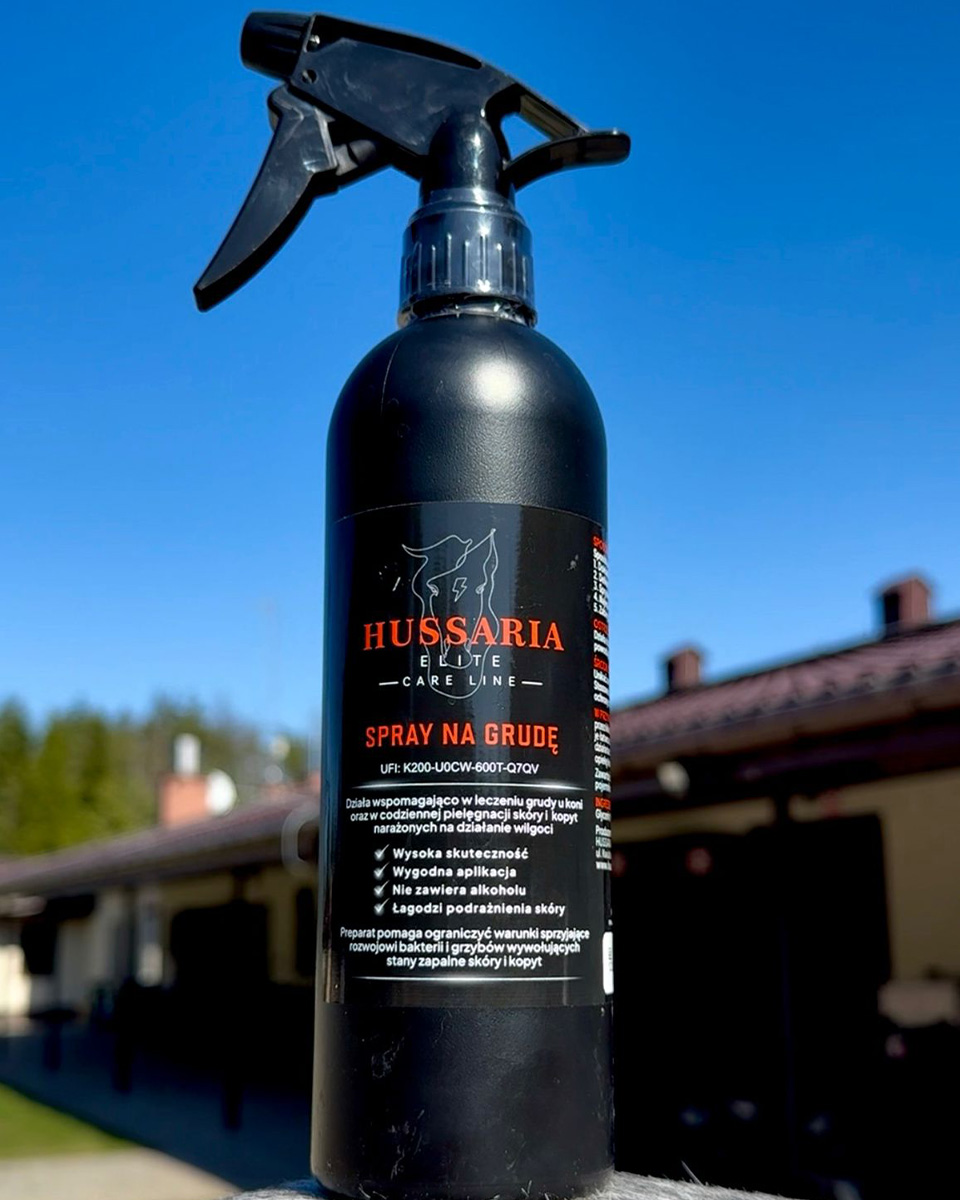
Mud Fever Spray – Daily Support for Skin Regeneration
Spray-form products work very well as part of the daily care routine for skin affected by mud fever.
The best results come from products that do not focus only on the surface of the skin but help support affected areas where the problem develops.
With mud fever, supporting affected tissues beneath the skin’s surface is particularly important, as the condition often extends beyond the visible lesions.
Thanks to its formula, Mud Fever Spray can:
- reach difficult-to-access areas
- support proper hygiene
- support skin regeneration
- help care for affected areas of the skin
The spray works particularly well as the first step in the daily care of problematic skin lesions.
With skin problems, a quick response and appropriate care from the very first symptoms can make a significant difference.
Mud Fever Gel – Protection, Soothing and Regeneration Support
Gel-form products work very well as the next stage of care for problematic skin.
After previously applying a product designed to support affected areas of the skin, the gel can help support:
- protection of the skin from further dirt
- limiting contact between affected areas and moisture
- soothing irritated skin
- creating more comfortable conditions for skin recovery
Thanks to its consistency, the gel remains on the skin for longer, creating an additional protective layer.
With skin affected by mud fever, it is important not only to support affected tissues but also to protect regenerating skin from external factors that may worsen the condition.
Formulas enriched with ingredients such as glycerine can additionally support skin comfort and help soothe affected areas.
That is exactly why proper care should not focus solely on the appearance of the skin, but above all on supporting genuine skin recovery.

The Most Common Mistakes Owners Make
Mud fever is often made worse by:
- excessively drying out the skin
- a lack of regular care
- ignoring the first symptoms
- leaving moist lesions without proper protection
- focusing only on a temporary improvement in the skin’s appearance
Drying out the skin does not always mean the problem has been resolved.
In many cases, the condition continues to affect deeper layers of the skin despite a temporary improvement in appearance.
FAQ — Mud Fever in Horses
What is mud fever in a horse?
Mud fever is a skin condition that most commonly affects the pasterns and lower parts of the legs.
What does mud fever in a horse look like?
The most common signs include scabs, redness, moist lesions and cracked skin.
Does mud fever hurt?
Yes — especially in more advanced cases.
What should you put on mud fever in a horse?
Ideally, products that support skin regeneration, proper hygiene and the rebuilding of the skin’s protective barrier.
Can mud fever come back?
Yes — especially when the skin is repeatedly exposed to moisture and irritating environmental factors.
Is an ointment for mud fever enough?
In many cases, proper hygiene, consistent care and support for skin regeneration are equally important.
Can mud fever cause swelling?
Yes — in more advanced cases, swelling and increased heat in the limb may occur.
Can mud fever make a horse limp?
With more severe soreness and skin lesions, the horse may show discomfort during movement.
Can you wash a horse with mud fever?
Yes, but it is important to dry the skin thoroughly afterwards and provide appropriate care that supports skin regeneration.
An Expert’s View
“With mud fever, it is extremely important to respond quickly and provide appropriate care that supports skin regeneration from the very first symptoms.”
“The biggest mistake is focusing solely on drying out the lesions temporarily instead of genuinely supporting skin regeneration and recovery.”
In cases of very advanced lesions, significant soreness or pronounced swelling, it is always advisable to consult a veterinarian.
If your horse is struggling with mud fever, pastern scabs or recurring skin problems around the legs, introducing proper daily care that supports skin regeneration and the rebuilding of the skin’s natural protective barrier can make a significant difference.
